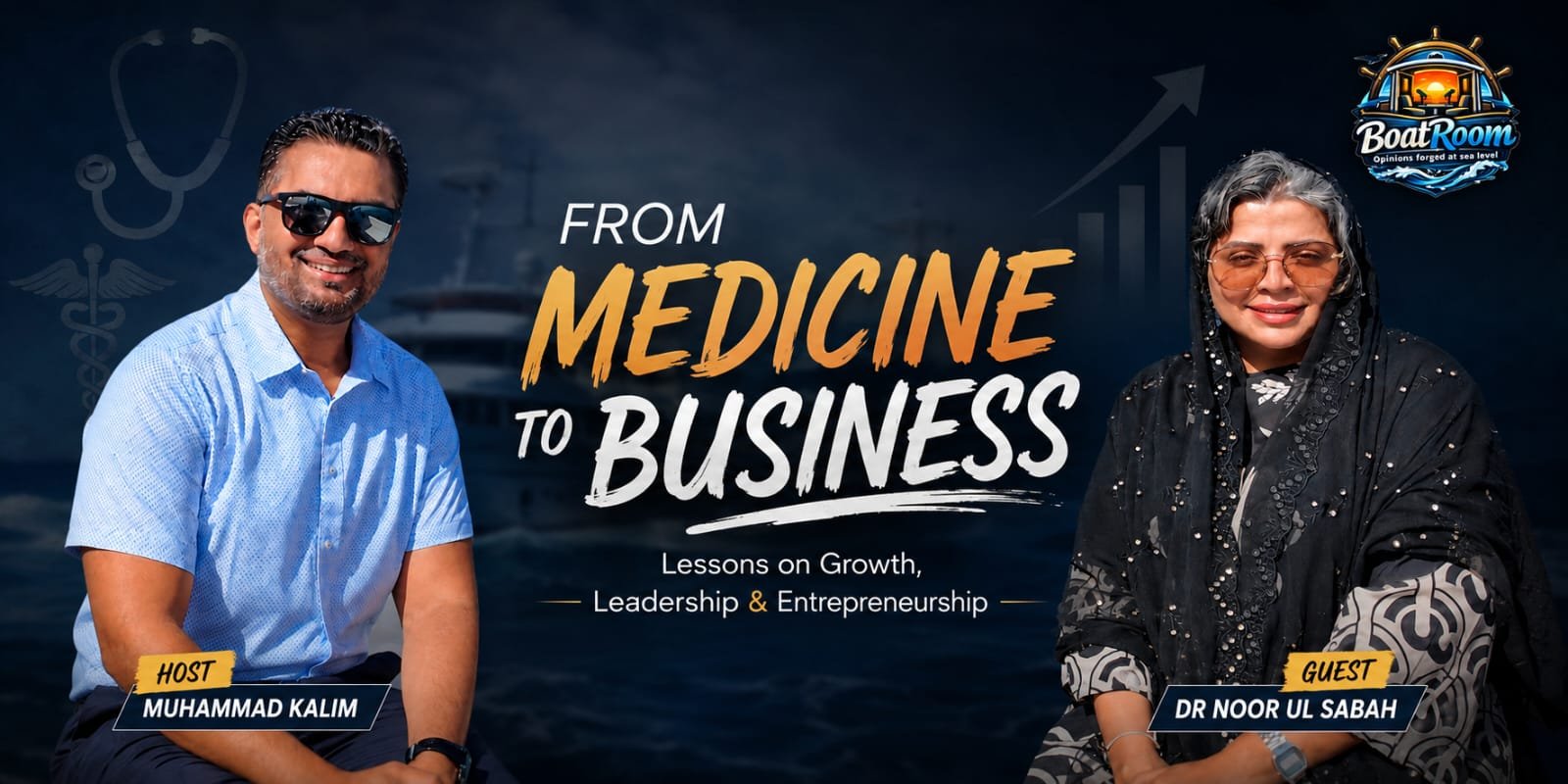
Financial Habits That Build Wealth: Lessons from Monika Zora on Money, Mentors, and Long-Term Success
Why do some people build lasting wealth while others spend decades chasing it?
Most people assume wealth comes from a high income, a lucky investment, or the right business opportunity. But according to wealth advisor Monika Zora, the real difference is much simpler: habits.
In Episode 11 of Boatroom, host Muhammad Kalim sat down with Monika Zora to discuss the financial habits of successful people, how wealthy individuals think about money, and why long-term wealth building starts long before someone becomes rich.
The conversation covered everything from saving and investing to mentorship, relationships, financial education, and the power of compounding. More importantly, it revealed practical lessons that anyone can apply regardless of their income level.
If you're serious about improving your financial future, these are the lessons worth paying attention to.
Table of Contents
- Why Financial Habits Matter More Than Income
- The Difference Between Being Rich and Being Wealthy
- Pay Yourself First: The Habit That Changes Everything
- Why Wealth Building Requires Structure
- The Compounding Effect and Long-Term Thinking
- Stop Letting Your Money Sit Idle
- A Real-Life Wealth Building Success Story
- Why Mentors Accelerate Success
- The Importance of Relationships and Loyalty
- Financial Habits That Keep People Stuck
- Invest in Education Before Anything Else
- Key Lessons from Monika Zora
- FAQs
Why Financial Habits Matter More Than Income
Many people believe wealth is directly connected to how much money someone earns.
While income certainly helps, Monika argues that financial habits play a much bigger role in determining long-term outcomes.
People earning six figures can still struggle financially. At the same time, people with average incomes often build impressive wealth over time.
The difference is usually not the amount they earn.
It's what they repeatedly do with the money they earn.
Small Decisions Create Big Results
Every financial decision creates a ripple effect.
The money you save.
The money you spend.
The skills you invest in.
The relationships you build.
Over time, these small decisions compound into larger outcomes.
That is why financial habits are often more important than one-time financial wins.
Wealth Is Built Through Repetition
One of the strongest themes throughout the episode was consistency.
Successful people rarely become wealthy because of one decision.
They become wealthy because they repeat productive behaviors for years.
"People are not becoming wealthy by choice. They become rich maybe, or I call it fake rich sometimes by choice." — Monika Zora
This distinction matters.
Looking wealthy and actually building wealth are two very different things.
The Difference Between Being Rich and Being Wealthy
Many people confuse income with wealth.
Having money coming in does not automatically mean someone is financially secure.
Rich vs Wealthy
A rich person may have a high income.
A wealthy person has assets, investments, systems, and financial security.
Wealth survives even when income temporarily stops.
That is why wealth building focuses on creating long-term stability rather than short-term appearances.
Why Appearances Can Be Misleading
Luxury cars, expensive watches, and designer clothing often create the illusion of success.
However, Monika emphasized that true wealth is often invisible.
Real wealth exists in investments, savings, business ownership, and assets that continue producing value over time.
Pay Yourself First: The Habit That Changes Everything
One lesson stood out more than any other.
Pay yourself first.
Monika referenced the timeless principles from The Richest Man in Babylon and explained why this habit appears repeatedly among financially successful people.
"You need to pay yourself first."
What Does Paying Yourself First Mean?
Most people follow this pattern:
Income → Bills → Expenses → Savings
Wealthy people reverse the process:
Income → Savings/Investments → Expenses
Even setting aside 10% of income creates a powerful foundation for wealth building.
Why Most People Never Start
Many people wait until they earn more money before saving.
Unfortunately, that day often never comes.
If someone cannot save when earning $1,000, they usually struggle to save when earning $10,000.
The habit matters more than the amount.
Why Wealth Building Requires Structure
Another major lesson from Episode 11 was understanding your numbers.
According to Monika, many people operate without any financial structure.
Know Your Numbers
If you don't know:
- How much you earn
- How much you spend
- How much you save
- How much you invest
then improving your financial future becomes extremely difficult.
One Financial Plan Doesn't Fit Everyone
Monika described financial planning as tailoring.
Just like clothing needs to fit the individual, financial strategies should match personal goals, responsibilities, and risk tolerance.
Successful wealth building always starts with clarity.
The Compounding Effect and Why Wealthy People Think in Decades
One of the most powerful concepts discussed in Episode 11 was the compounding effect.
Most people understand compounding when it comes to money, but very few understand how it applies to habits, relationships, knowledge, and business growth.
Monika explained that wealthy individuals think differently about time.
While most people focus on the next month or year, wealthy people often think 10, 20, or even 30 years ahead.
"Wealthy people think in decades. They don't think in months or in years."
Why Long-Term Thinking Changes Everything
When someone focuses only on short-term results, they often make emotional decisions.
They want immediate returns.
They want instant success.
They want quick results.
However, wealth building rarely works that way.
Successful investors, entrepreneurs, and business owners understand that the biggest rewards often come from patience.
The Power of Small Improvements
Monika shared a simple example.
If someone starts with $1,000, their goal should not be turning it into a million overnight.
Instead, the focus should be on turning $1,000 into $1,100.
Then $1,100 into $1,250.
Then continuing the process.
The same principles apply whether someone is managing hundreds, thousands, or millions.
The process remains the same.
The numbers simply become larger.
Stop Letting Your Money Sit Idle
Many people believe saving money is enough.
While saving is important, Monika explained that money should always have a purpose.
One of the biggest financial mistakes people make is allowing large amounts of cash to sit untouched for years.
The Hidden Cost of Inflation
A common misconception is that money remains safe simply because it stays in a bank account.
In reality, inflation quietly reduces purchasing power over time.
Monika shared an example of a client who kept a significant amount of money in a checking account.
Every year, inflation reduced the value of those savings.
The money wasn't being spent.
It wasn't being lost.
It simply wasn't growing.
Make Your Money Work for You
This doesn't mean every dollar needs to be invested aggressively.
The lesson is simpler than that.
Money should be positioned in a way that gives it an opportunity to grow.
Whether through savings accounts, investments, businesses, or assets, successful wealth building involves putting capital to work rather than leaving it idle.
As Monika explained, wealthy people don't keep money "under the pillow."
They look for ways to make money generate more money.
A Real-Life Wealth Building Success Story
One of the most memorable parts of the conversation was a real client story that perfectly demonstrated the importance of thinking differently.
The Traditional Plan
A client approached Monika after saving approximately 500,000 AED over ten years.
His goal seemed straightforward.
He wanted to purchase a single apartment as an investment.
For many people, this would appear to be a smart decision.
However, Monika encouraged him to think beyond the traditional approach.
Looking Beyond One Investment
Instead of buying a single property, she suggested using his hospitality experience to build an Airbnb management business.
The idea was simple.
Rather than owning one property, he could manage multiple properties and create a scalable business model.
The Results
He started with only a few units.
Then he expanded.
Over time, his business grew dramatically.
Today, he manages more than 135 properties in Dubai.
The lesson isn't necessarily about real estate.
The lesson is about perspective.
Sometimes the biggest opportunities come from looking at a situation differently.
Strong wealth building often begins when people stop asking, "What can I buy?" and start asking, "What can I build?"
Why Mentors Accelerate Success
Another major theme throughout the episode was mentorship.
Monika strongly believes that learning from experienced people can significantly shorten the path to success.
Learn From People Who Have Already Done It
One of the easiest ways to avoid costly mistakes is to learn from someone who has already made them.
Successful mentors provide:
- Experience
- Guidance
- Perspective
- Accountability
Instead of spending years figuring everything out alone, mentorship can help people move faster.
Put Yourself in the Right Rooms
Monika referenced a story about a billionaire who was asked what he would do if he lost everything.
His answer was fascinating.
He would immediately place himself in environments filled with successful people.
Why?
Because successful people often share valuable lessons, opportunities, and insights.
The environment around you influences your thinking more than most people realize.
Your Circle Shapes Your Future
The people you spend time with influence:
- Your mindset
- Your habits
- Your ambitions
- Your standards
If everyone around you complains, eventually you start complaining too.
If everyone around you focuses on growth, learning, and opportunity, those behaviors become normal.
This is one reason successful people are intentional about who they spend time with.
The Importance of Relationships and Loyalty
While many conversations about wealth focus on money, Monika repeatedly returned to a different subject.
Relationships.
According to her, relationships are one of the most valuable assets anyone can build.
Wealth Is Not Just About Money
Business opportunities often come through people.
Partnerships come through people.
Mentorship comes through people.
Growth often comes through people.
That is why relationship-building should be viewed as an investment rather than a social activity.
Loyalty Creates Long-Term Opportunities
Monika spoke about remaining loyal to mentors and people who helped her early in her career.
She believes loyalty creates trust.
Trust creates opportunities.
And opportunities often create growth.
In a world where many people constantly chase the next opportunity, consistency and loyalty can become competitive advantages.
Be a Relationship Builder
One of her most memorable lessons was simple:
Build relationships before you need them.
People who focus only on transactions often struggle to create long-term success.
People who focus on relationships usually create stronger opportunities over time.
Financial Habits That Keep People Stuck
While discussing success habits, Monika also highlighted several habits that prevent people from achieving financial freedom.
Not Knowing Your Numbers
This was perhaps the biggest mistake she identified.
Many people cannot accurately answer simple financial questions.
How much do they earn?
How much do they spend?
How much do they save?
How much do they invest?
Without that clarity, effective wealth building becomes difficult.
Ignoring Small Money Leaks
Many people lose money through small recurring expenses.
Unused subscriptions.
Impulse purchases.
Unnecessary services.
Daily spending habits.
Individually these expenses seem insignificant.
Collectively they can become substantial.
The Coffee Example
Monika used a simple example.
A daily coffee purchase may not seem expensive.
However, when repeated over years, the amount becomes surprisingly large.
The lesson is not to stop enjoying life.
The lesson is to become aware of where money is going.
Awareness is the first step toward better money management.
Financial Education Is the Best Investment You Can Make
As the conversation came to a close, Monika shared what may have been her most important message.
Invest in yourself.
Skills Stay With You Forever
Markets change.
Jobs change.
Businesses change.
Economic conditions change.
Skills remain.
Knowledge remains.
Experience remains.
Why Learning Produces the Highest Return
During COVID, Monika invested heavily in learning new skills and working with coaches.
She viewed education as an asset rather than an expense.
That investment helped accelerate her personal and professional growth.
For anyone focused on wealth building, financial education often produces returns far beyond the original investment.
"No matter what happens, when you learn new things and when you get educated, that stays with you and no one can take it from you."
Build Knowledge Every Day
Even small improvements matter.
Reading.
Learning.
Listening to podcasts.
Working with mentors.
Developing new skills.
These activities compound over time just like money.
Key Lessons From Monika Zora
If there is one message from Episode 11 of Boatroom, it is this:
Wealth is built long before someone becomes wealthy.
The habits you practice today create the financial future you experience tomorrow.
Here are the biggest lessons from the episode:
- Pay yourself first.
- Know your numbers.
- Think in decades, not months.
- Let compounding work in your favor.
- Stop leaving money idle.
- Learn from mentors.
- Build strong relationships.
- Invest in financial education.
- Track where your money goes.
- Focus on consistency over shortcuts.
Conclusion
There is no secret formula for financial success.
The principles of wealth building are surprisingly simple.
Develop strong financial habits.
Think long term.
Continue learning.
Build meaningful relationships.
Make intentional decisions with your money.
Episode 11 of Boatroom with Monika Zora reminds us that financial freedom is not created overnight. It is created through small actions repeated consistently over many years.
The people who succeed financially are not always the smartest or the luckiest.
More often than not, they are the people who develop the right habits and stay committed to them long enough for the results to compound.
Frequently Asked Questions
What are the financial habits of wealthy people?
Wealthy people typically pay themselves first, track their finances, invest consistently, think long term, and focus on continuous learning and improvement.
Why is paying yourself first important?
Paying yourself first ensures that saving and investing become priorities rather than afterthoughts. It is one of the most effective wealth building habits.
How does the compounding effect help build wealth?
Compounding allows money, skills, and habits to grow over time. Small improvements repeated consistently can create significant results over the long term.
What is the difference between being rich and being wealthy?
Being rich usually refers to having a high income, while being wealthy means having assets, investments, and financial security that continue generating value over time.